Aircraft Detailing at Paris-Le Bourget (LFPB)
Ramp-side and hangar detailing for super-midsize to ultra-long-range jets at LFPB
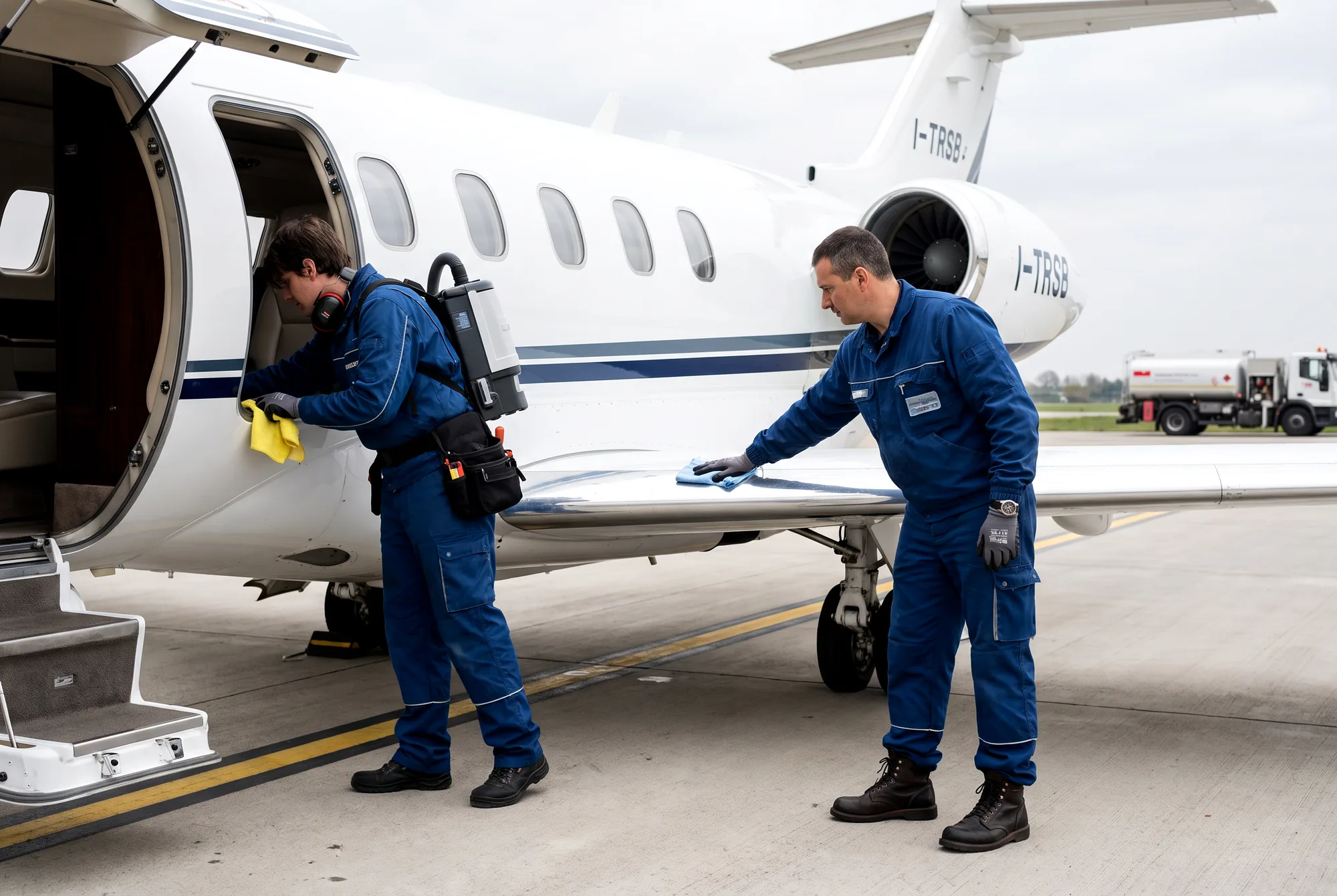
Aircraft Detailing at Paris-Le Bourget (LFPB) serves chief pilots, flight-department managers and charter operators moving through Europe's busiest business-aviation field. We work with handling agents present at the airport to deliver waterless exterior wash, full interior detail, brightwork polish, decontamination and ceramic coating on the ramp or inside one of the many hangars. Every turnaround is documented with a photo report and a tech-log entry; the handler receives advance notice of our arrival, our airside-escort requirement and the stand time we need, so your next departure slot stays protected.


07/25 · 2991 m, 03/21 · 2665 m, 09/27 · 1845 m
AIP and airport data220 ft
H24 (24/24H) for arrivals; departures restricted at night
Jet departures from the apron prohibited 22:15-06:00 local (approved medevac excepted) per Universal Weather; ExecuJet states take-offs 06:00-22:00 with landings round the clock; COHOR refers to AIP night restrictions11 km
central Paris5 on the airport
independent, no affiliationZone d'aviation d'affaires (business aviation zone) along Avenue de l'Europe - the whole airport is dedicated to business aviation, each FBO operating its own terminal
Why does operational timing matter at Paris-Le Bourget?
Le Bourget handles more movements than any other business-aviation airport in Europe, and ramp space along the Zone d'aviation d'affaires is shared by five handling agents, each running its own terminal and apron. Stand allocation changes throughout the day, and jet departures from the apron are prohibited between 22:15 and 06:00 local—approved medevac excepted—so a missed slot can push your next leg into the following morning.
We schedule every detail around your handler's turnaround window. A quick turn takes forty-five minutes on a super-midsize, timed to finish before refuelling; a rinseless exterior wash runs ninety minutes if the aircraft is cold-soaked or if we are working around GPU and catering trucks. Full interior details and complete details move into a hangar whenever the handler can offer one, protecting both the cabin and our own schedule from weather. The handler receives our estimated stand time in writing before we pass airside, and we update the crew by phone if we finish early or if decontamination clay reveals paint that needs a single-stage polish.
What does the handler expect from a third-party detailing crew at LFPB?
Handling agents at Le Bourget will not grant ramp access to an unannounced third party. We send the handler a formal request twenty-four hours before the detail, naming the aircraft registration, the stand or hangar, the scope of work and the names on our airside passes. The handler confirms in writing that we may proceed, and that confirmation goes into the flight-department file alongside our insurance certificate and our SDS sheets for every chemical we carry.
On the day, we check in at the handler's terminal, collect our escort if the handler requires one, and walk airside with our kit in hand. We do not touch pitot tubes, static ports, or any panel forward of the pressure bulkhead; we do not open avionics bays; we do not remove or reposition GPU leads, chocks or intake covers until the handler or the crew tells us to do so. If we find a fluid leak, a loose fastener or paint delamination, we photograph it and tell the captain before we continue. The handler appreciates predictable behaviour, and predictable behaviour keeps our access intact for the next visit.
What changes at Paris-Le Bourget that a detailing crew needs to know?
Le Bourget sits at 220 feet elevation, eleven kilometres from central Paris, and operates three runways: 07/25 at 2,991 metres, 03/21 at 2,665 metres and 09/27 at 1,845 metres. The airport is open twenty-four hours for arrivals, but jet departures from the apron are restricted between 22:15 and 06:00 local. Most handling agents maintain terminal hours from 06:00 to 22:00, with call-out available outside that window. The field is not slot-coordinated under normal circumstances, though temporary coordination was imposed during the 2023 Rugby World Cup, and the biennial Paris Air Show—held at Le Bourget in odd-numbered years—creates parking limitations and access restrictions that ripple through the summer schedule.
For a detailing crew, the curfew means any complete detail or ceramic-coating application must finish by early evening or move into a hangar overnight. The large hangar inventory on the field makes this easier than at most European capitals: one handler alone operates 16,700 square metres of secure hangar space. Seasonal peaks follow the Paris events calendar, and during the air show we coordinate with the handler weeks in advance to secure stand time. The presence of five handling agents means we can usually find ramp space even when one terminal is full, but it also means we carry five separate airside-pass sponsor letters and we confirm which handler you are using before we file the access request.
How do you manage access and airside logistics at a multi-terminal field?
The Zone d'aviation d'affaires runs along Avenue de l'Europe, and each of the five handling agents operates its own terminal and ramp within that zone. We hold current airside passes sponsored by each handler, but the pass alone does not grant access; every visit requires a new request filed with the specific handler managing your aircraft, naming the registration, the stand, the time window and the scope of work. The handler replies with a written approval, and that approval is our entry document at the terminal security checkpoint.
If the handler requires an escort, we collect that person at the terminal desk and walk airside together. If the aircraft is parked on a remote stand or inside a hangar, the escort drives us in a handler vehicle. We carry our own lighting, our own water and our own waste bags, so we do not need to borrow handler equipment or leave any trace on the ramp. When the detail is finished, we return to the terminal with the escort, sign out at security, and email the photo report and the tech-log entry to the captain and to the handler within two hours.
What documentation do you provide after an aircraft detail at Le Bourget?
Every detail closes with a written entry for the tech log and a digital photo report. The tech-log entry records the scope of work, the products used, the areas treated and any defects we observed; it is written in English, dated and signed by the lead technician, and delivered as a PDF that the captain can print or file electronically. The photo report contains time-stamped images of the exterior, the cabin, the brightwork and any condition notes—fluid stains on the belly, scratches on a nacelle, wear on the cheat line—so the flight department has a visual record of the aircraft's appearance at that moment.
If we applied a ceramic coating, the report includes the batch number of the coating, the ambient temperature during application, the cure time and the care instructions for the next thirty days. If we found a maintenance item—a loose inspection panel, a missing static-port cover, a hydraulic weep—we photograph it, note it in the report and tell the captain immediately so the handler can call a technician if needed. The handler receives a copy of the final report as a courtesy, which helps when the same aircraft returns and the new crew asks what was done last time.
Which detailing services make sense for a Paris turnaround?
A quick turn between two legs takes forty-five minutes: we reset the cabin, clean the galley and lavatory, wipe the windows and vacuum the carpets while the handler refuels and restocks catering. An exterior dry wash adds ninety minutes and requires stand time without ground equipment in the way, so we schedule it for the first hour after arrival or the last hour before departure. If the aircraft will be on the ground overnight, a full interior detail and a rinseless exterior wash can run in sequence, finishing by evening curfew.
Brightwork polish and paint decontamination need daylight and stable temperature, so we book those services into a hangar whenever possible. A complete detail—exterior wash, clay, single-stage polish, brightwork, full interior and disinfection—takes a full day and works best when the aircraft is based at Le Bourget for a weekend or when the principal is in Paris for three nights. Ceramic coating requires two days: one for paint correction and polish, one for coating application and cure. Fleet operators based at LFPB can lock in a monthly interior detail, a quarterly exterior polish and an annual ceramic top-up under a twelve-month care program, spreading the cost and the calendar across the year.
Questions operators ask about detailing at Paris-Le Bourget
Do you need prior permission to access the ramp at Paris-Le Bourget?
Yes; we file a written request with the handling agent twenty-four hours before the detail. Every ramp visit requires advance approval from the specific handler managing your aircraft. We send the request one day ahead, naming the registration, the stand, the time and the scope of work, and the handler replies with written confirmation that we forward to the flight department.
Can you work overnight at Le Bourget, or does the curfew stop detailing after 22:00?
Jet departures are prohibited from 22:15 to 06:00, but we can work inside a hangar overnight if the handler arranges it. The curfew restricts departures from the apron, not ground services. If your aircraft is parked in a hangar overnight, we can complete a full interior detail or apply a ceramic coating without affecting your morning slot. Ramp work finishes by early evening to respect noise limits and handler operating hours.
How long does a quick turn take on a super-midsize jet at LFPB?
Forty-five minutes, timed to finish before or after refuelling. We reset the cabin, clean the galley and lavatory, wipe the windows and vacuum the carpets in forty-five minutes. The handler knows our schedule in advance, so we stay out of the way during fuel upload and catering, and your next departure slot remains protected.
Which handling agents at Paris-Le Bourget can sponsor your airside passes?
We hold passes sponsored by all five handling agents present at the airport. Our team carries airside credentials sponsored by each of the FBOs operating in the Zone d'aviation d'affaires. When you book a detail, we confirm which handler you are using, file the access request with that handler and collect our escort—if required—at their terminal.
Do you carry your own water for a rinseless wash, or does the handler supply it?
We bring our own demineralised water, our own lighting and our own waste bags. Every visit is self-contained: we carry water, microfibre, lighting and waste disposal in our kit, so we do not need to borrow handler equipment or leave any residue on the ramp. This keeps the operation fast and keeps the handler happy.
Can you move an aircraft into a hangar for a complete detail, or does the captain arrange that?
The handler arranges hangar access; we coordinate the timing once the aircraft is inside. Hangar moves are handled by the FBO, not by the detailing crew. If your handler confirms that a hangar bay is available, we schedule the complete detail or ceramic coating to begin as soon as the aircraft is towed inside, and we notify the handler when we finish so they can tow the aircraft back to the ramp.
What happens if you find a fluid leak or a loose panel during the exterior wash?
We photograph it, note it in the report and tell the captain immediately. Any defect discovered during the detail is documented with time-stamped photos and reported to the crew before we continue. The handler can then call a technician if the issue is maintenance-related, and the photo goes into the final report so the flight department has a record.
Does the Paris Air Show affect your ability to schedule a detail at Le Bourget?
Yes; the biennial air show creates parking limits and access restrictions, so we book weeks in advance. The Paris Air Show is held at Le Bourget in odd-numbered years and fills the ramp with static displays, temporary chalets and exhibitor aircraft. During the show and the week before, we coordinate with the handler early to secure stand time and confirm that our airside passes will be honoured.
Do you provide a tech-log entry and a photo report after every detail?
Yes; both documents are delivered by email within two hours of finishing the work. The tech-log entry records the scope, the products and any defects; the photo report shows the exterior, the cabin, the brightwork and any condition notes. Both are dated, signed and sent as PDFs to the captain and the handler, giving the flight department a complete record of the service.
Can a fleet based at LFPB lock in a monthly detailing schedule for the whole year?
Yes; our twelve-month Fleet Care Program schedules quick turns, monthly interiors and quarterly polish in advance. Fleet operators based at Paris-Le Bourget can pre-book a full year of appearance services—quick turns after every trip, a deep interior each month, exterior polish every quarter and an annual ceramic top-up—at a fixed monthly rate. The handler receives the schedule in January, and we adjust dates as your flying pattern changes.