Aircraft Detailing at Rome Fiumicino (LIRF)
Overnight appearance work for super-mid to ultra-long-range jets at a capital airport with no GAT.
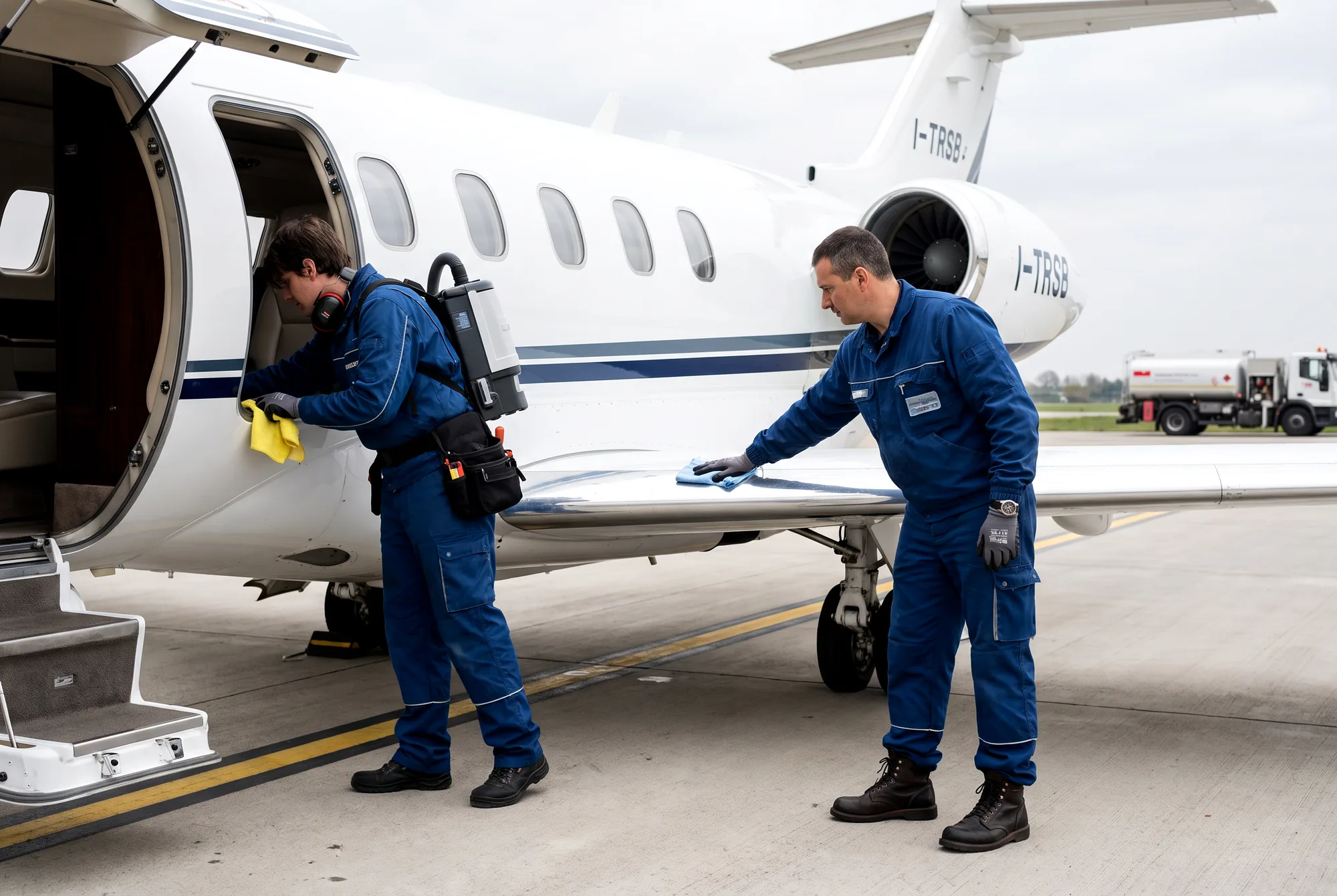
Aircraft Detailing at Rome Fiumicino is a ramp-based service for flight departments and charter operators managing turnarounds at Italy's busiest international gateway. With general aviation accepted only between 23:01 and 06:00 local—when Ciampino is closed—every detail, dry wash and cabin reset happens during the night shift, coordinated through AviaVIP, Sky Services or Universal Aviation. The airport sits fifteen metres above sea level, thirty kilometres south-west of Rome city centre, and offers no FBO terminal or VIP facilities; passengers clear customs in the main commercial building, and the aircraft remains on a handler-controlled stand throughout the stop.


16R/34L · 3902 m, 16L/34R · 3902 m
AIP and airport data15 ft
H24; general/business aviation accepted only 23:01-06:00 local (when Ciampino is closed)
30 km
Rome city centre (south-west)2 on the airport
independent, no affiliationNone – no General Aviation Terminal; passengers clear CIQ in the main commercial terminal
What changes at Rome Fiumicino?
Fiumicino operates twenty-four hours, but general and business aviation movements are permitted only from 23:01 to 06:00 local, when Ciampino—the city's dedicated business-aviation field—is closed. That window defines every detailing turnaround: an aircraft inbound at midnight can receive a full exterior dry wash, brightwork polish and cabin disinfection before a dawn departure, but daylight work is not an option unless the jet holds a slot exemption or operates under a commercial AOC.
The field is slot-coordinated and PPR is mandatory. Three handling agents—AviaVIP, Sky Services and Universal Aviation—manage ramp access, GPU supply and airside escort; none operates an FBO terminal, so crew and passengers move through the main terminal for customs and immigration. At fifteen feet elevation the air is dense year-round, but summer apron temperatures above thirty-five Celsius mean cabin materials and exterior paint endure sustained UV and heat cycling. A ceramic coating applied here in spring will face a full Mediterranean summer before the first winter rain arrives.
Why does the overnight curfew matter for aircraft detailing?
When the only legal window for business aviation is six hours after dark, every service must fit between block-in and the morning PPR slot. A Quick Turn—cabin vacuum, galley wipe-down, lavatory service, window polish—takes forty-five minutes and leaves margin for fuelling, catering and a pre-flight walk-around. An Exterior Dry Wash with waterless product requires two hours if the fuselage carries dust from a North African leg or salt haze from a coastal departure. Brightwork polish on a super-midsize nacelle and leading edges adds another ninety minutes, and the work happens under ramp flood-lights with a handler's safety observer present.
Full Interior Detail and Complete Detail packages are scheduled for aircraft remaining on stand through the day, then departing the following night. The cabin is stripped, leather conditioned, veneer cleaned, carpets extracted and sidewalls wiped in daylight inside a closed aircraft; exterior work follows at dusk. Charter operators rotating through Fiumicino every seventy-two hours often book a Quick Turn on the first stop, then a full interior on the return leg when the schedule permits a longer ground time.
What do handlers expect from a third-party detailing crew at Fiumicino?
Handling agents at a slot-coordinated capital airport enforce strict airside-access and safety protocols. Every detailer carries a national airside pass or works under continuous handler escort; the latter incurs a fee passed to the operator. Ramp vehicles, cleaning carts and waste bins must remain within the marked stand boundary, and any movement across the apron requires radio clearance. GPU leads, chocks and pitot covers are the handler's responsibility; the detailing crew touches only the aircraft skin, cabin interior and gear bays.
AviaVIP and Sky Services both expect a method statement and material safety data sheets twenty-four hours before the first service, particularly for solvent-based brightwork polish or multi-stage ceramic prep. If the aircraft is cold-soaked after a high-altitude arrival, the handler will delay cabin entry until internal temperature rises above five Celsius to prevent condensation damage to avionics and upholstery. No-touch avionics bays, static ports and angle-of-attack vanes are recorded in the tech log as 'cleaned externally only', and the captain or chief pilot signs the entry before departure.
How does Mediterranean climate affect paint and cabin materials in Rome?
Summer apron temperatures at Fiumicino regularly exceed thirty-five Celsius, baking exhaust residue and turbine-oil mist onto the belly and nacelles. A single-stage polish will remove light oxidation and restore gloss, but if the jet has sat through July and August without a wash, a two-stage correction—decontamination with a clay bar, then compound polish—is necessary before any wax or ceramic topcoat will bond correctly. Brightwork oxidises faster in salt air; a mirror finish on aluminium leading edges can haze within eight weeks if the aircraft operates coastal routes without a protective sealant.
Inside the cabin, leather seats and sidewall panels expand and contract with heat cycling, opening seams and accelerating dye transfer from clothing. A Full Interior Detail includes pH-neutral cleaner, conditioner with UV inhibitors, and inspection of high-wear areas—armrest edges, seat bolsters, galley handles—for early cracking. Carpets trap fine dust blown onto the ramp from surrounding construction and agricultural land; extraction with a HEPA vacuum and low-moisture shampoo prevents grit from abrading the weave during taxi and take-off vibration.
What is the difference between recurring fleet care and one-off detailing at this base?
A Fleet Care Program at Fiumicino is designed for an operator with two or more aircraft on a regular rotation: a monthly full interior, quarterly brightwork polish and a quick turn after every second or third leg. The twelve-month schedule is filed with the handler so ramp space, GPU and water access are reserved in advance, and the chief pilot receives a digital logbook recording every service date, materials used and condition notes. Recurring work catches paint defects early—stone chips on the nose, exhaust staining on the tail cone, hydraulic weeps in the gear bays—before they require expensive corrosion repair or a respray.
One-off Complete Detail or Ceramic Coating appointments are booked by charter operators preparing an aircraft for a high-profile client series, or by flight departments ahead of an annual inspection when the jet will be photographed for insurance or resale records. These services require a full day on stand, sometimes two if paint correction reveals deeper oxidation or if OEM cabin materials need specialist treatment. The handler invoices separately for the extended stand time, and the operator must hold a valid slot or schedule the work during the night window when general aviation is permitted.
Which services make sense for a quick Rome turnaround?
Quick Turn and Cabin Disinfection are the two services that fit reliably inside a two-hour Fiumicino stop. The former resets the cabin to flight-ready standard—vacuum, galley wipe, lavatory service, window polish, waste removal—and takes forty-five minutes with a two-person crew. Disinfection adds another twenty minutes: every high-touch surface, seat pocket, galley handle and lavatory fixture is treated with aviation-approved quaternary-ammonium or hydrogen-peroxide solution, and the air path is fogged if the aircraft has carried a passenger with a declared illness.
Exterior Dry Wash is possible if the jet remains on stand for three hours and the handler confirms water restrictions are not in force. A rinseless wash uses less than twenty litres, applied by hand with microfibre and collected in drip trays, so it complies with most European airport environmental rules. Brightwork Polish extends ground time to four hours and is usually combined with a full interior when the schedule permits an overnight or day-long stop. Ceramic Coating is never a quick-turn option; the aircraft must be stationary for twenty-four to forty-eight hours while paint is corrected, the coating cures and a final inspection confirms hydrophobic performance on every panel.
Questions operators ask about detailing at Rome Fiumicino
Can business jets receive detailing during the day at Fiumicino?
Only if the aircraft holds a slot exemption or operates under a commercial AOC; general aviation is otherwise restricted to 23:01–06:00 local. Fiumicino permits general and business aviation movements only between 23:01 and 06:00 local, when Ciampino is closed. Detailing during daylight hours requires the jet to hold a slot exemption or to operate under a commercial air-operator certificate. Most operators schedule overnight work to comply with the curfew window.
Is there an FBO terminal or VIP facility at Rome Fiumicino?
No; passengers clear customs in the main commercial terminal, and the aircraft remains on a handler-controlled stand. Fiumicino has no dedicated general-aviation terminal or FBO lounge. Crew and passengers move through the main terminal for customs and immigration, and the aircraft is parked on a stand managed by AviaVIP, Sky Services or Universal Aviation throughout the stop.
How long does a Quick Turn take at Fiumicino?
Forty-five minutes with a two-person crew for cabin vacuum, galley wipe, lavatory service and window polish. A Quick Turn requires forty-five minutes and includes cabin vacuum, galley wipe-down, lavatory service, window cleaning and waste removal. The service fits inside a two-hour turnaround, leaving time for fuelling, catering and the pre-flight walk-around.
What is the minimum ground time for a full exterior dry wash?
Two hours if the aircraft carries light dust; longer if exhaust staining or salt haze requires decontamination. An Exterior Dry Wash takes two hours for a super-midsize jet with light dust or pollen. If the fuselage shows exhaust residue, salt haze or insect strikes, decontamination with a clay bar adds thirty to forty-five minutes before the waterless wash can begin.
Do I need to arrange airside access for the detailing crew?
No; the crew carries national airside passes or works under handler escort, arranged in advance. Every detailer holds a valid Italian airside pass or operates under continuous handler escort. The handling agent arranges escort and includes the cost in the ground-handling invoice; no separate airside-access request is required from the operator.
Can brightwork be polished at night under ramp lighting?
Yes; nacelles, leading edges and spinners are polished by hand under flood-lights with a handler safety observer present. Brightwork polish is routinely performed during the night window at Fiumicino. The handler provides flood-lighting, and a safety observer remains on stand throughout the work. The final inspection is completed in daylight if the aircraft remains on the ramp past dawn.
What does a Fleet Care Program include at this airport?
A twelve-month schedule of quick turns, monthly interiors, quarterly brightwork and annual ceramic refresh, with reserved ramp slots. A Fleet Care Program covers scheduled quick turns after every second or third leg, a full interior detail each month, quarterly brightwork polish and an annual ceramic-coating refresh. Ramp space and handler coordination are reserved in advance, and the chief pilot receives a digital logbook of every service.
How does summer heat affect cabin materials in Rome?
High apron temperatures accelerate leather dye transfer, seam expansion and carpet-weave abrasion from trapped dust. Summer apron temperatures above thirty-five Celsius cause leather seats and sidewall panels to expand, opening seams and accelerating dye transfer. Carpets trap fine dust that abrades the weave during taxi vibration. A full interior detail includes conditioner with UV inhibitors and low-moisture extraction to prevent long-term damage.
Is water available on the ramp for exterior washing?
Dry wash only; a rinseless method uses less than twenty litres and complies with airport environmental rules. Fiumicino enforces water restrictions on the apron, so all exterior cleaning uses aviation-approved waterless or rinseless products. A rinseless wash consumes less than twenty litres, applied by hand and collected in drip trays to meet European environmental standards.
Can ceramic coating be applied during a single overnight stop?
No; the aircraft must remain stationary for twenty-four to forty-eight hours while paint is corrected and the coating cures. Ceramic coating requires the aircraft to stay on stand for a full day or longer. Paint correction, panel prep, coating application and cure time span twenty-four to forty-eight hours, depending on ambient temperature and humidity. The handler invoices separately for the extended ramp occupancy.