Aircraft Detailing at Turin Caselle (LIMF)
Ramp detailing, full interior deep-cleans and ceramic protection at Turin's slot-coordinated GA terminal
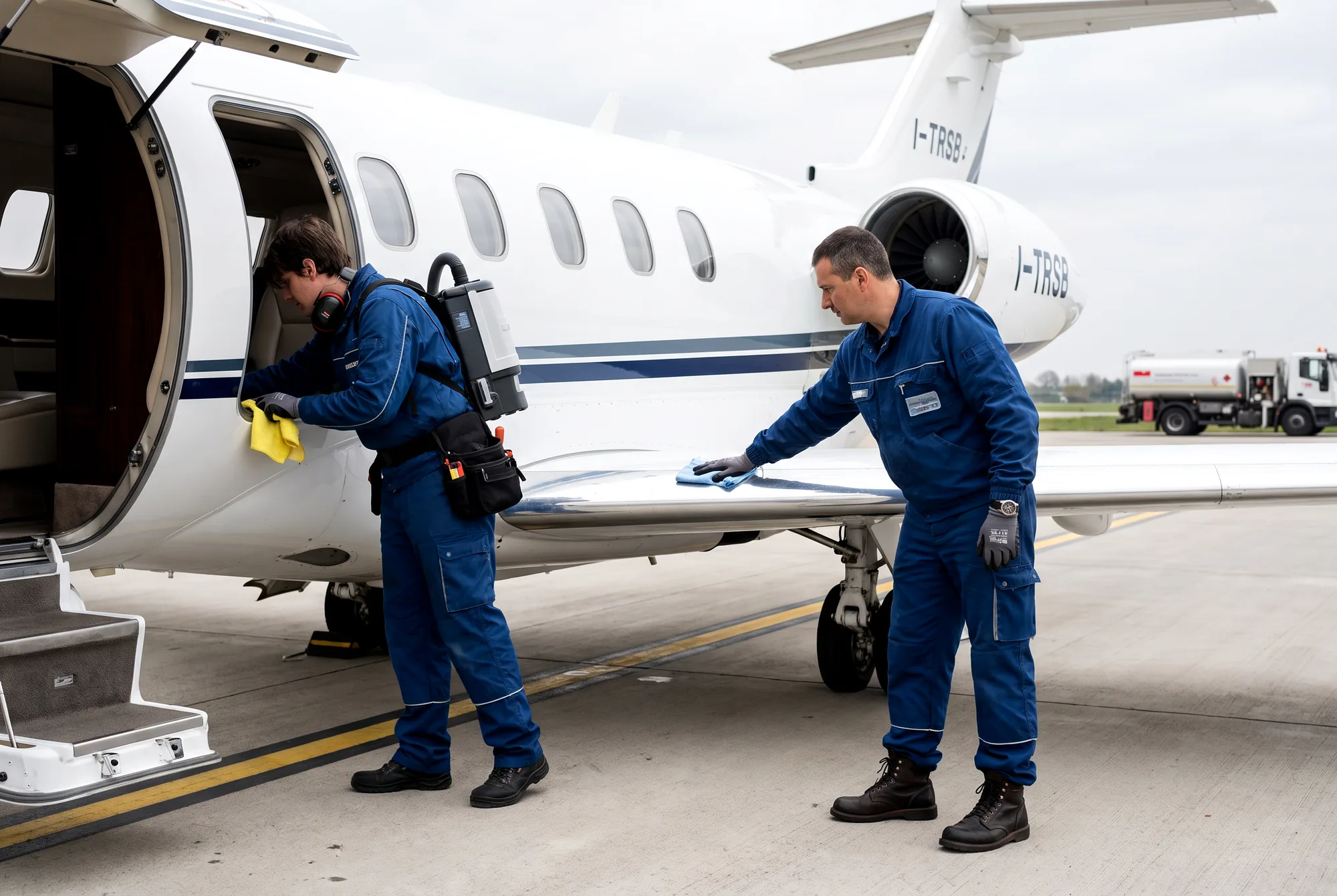
Aircraft Detailing at Turin Caselle serves chief pilots, flight departments and charter operators working through the General Aviation Terminal, sixteen kilometres north of Turin city centre. We deliver quick turns between legs, waterless exterior wash, full interior details, brightwork polish, ceramic coating and fleet-care scheduling for super-midsize through ultra-long-range jets based or transiting LIMF. Every service is documented with a photo report and logged against the tech log. Four handling agents operate from the terminal; we coordinate directly with your handler and with SAGAT's apron team to fit the work inside your slot and turnaround window.


18/36 · 3300 m
AIP and airport data989 ft
16 km
Turin city centre (north)4 on the airport
independent, no affiliationGeneral Aviation Terminal (SAGAT) – 4,700 m² on three levels
What changes at Turin Caselle?
The field sits at 989 feet, with a single runway—18/36, 3,300 metres—and tower coverage around the clock. Runway 36 is preferential, so most arrivals and departures use the northern flow. The General Aviation Terminal spans 4,700 square metres across three levels and was purpose-built for the 2006 Winter Olympics; SAGAT provides central apron coordination, follow-me and refuelling, while four handling agents—SAGAT Handling, Aviapartner, Argos VIP Private Handling (AviaVIP) and Esair Handling—work inside the terminal.
Turin Caselle is slot-coordinated. That means every movement carries a prior-permission-required window, and any detailing work must finish before your allocated departure slot. We build the scope and timeline with your handler as soon as you file, so a two-hour interior detail or a three-hour ceramic top-up never pushes you into the next available slot. Winter brings cold-soaked wings and the occasional need for Type I fluid; summer heat softens cabin plastics and accelerates dust adhesion on the belly and nacelles. The Piedmont plain delivers steady wind but little coastal salt, so paint decontamination intervals can stretch compared to a seaside base.
Which services make sense between two legs at LIMF?
Quick Turn is the flight-ready reset: cabin vacuum, galley wipe-down, lavatory service, window cleaning and a waterless exterior pass across the cheat line, nose, winglets and tail. It takes forty-five to seventy-five minutes depending on cabin configuration, and we schedule it inside the minimum turnaround so the aircraft is ready when the next passengers arrive. If you have a longer sit—three hours or more—we add Exterior Dry Wash to cover the entire fuselage, wings, belly and nacelles with aviation-approved waterless product, removing exhaust stain, bug strike and apron dust without a drop of rinse water.
Cabin Disinfection layers onto either service when you're carrying principal passengers or need to document sanitisation between charter legs. We treat every high-touch surface—seat controls, armrests, belts, galley handles, lavatory fixtures—and fog the air path with an aviation-approved disinfectant. The photo report goes to the handler and your operations desk within an hour of pushback, so you have time-stamped proof before the next boarding.
How does a full interior detail work at the General Aviation Terminal?
Full Interior Detail is the deep clean: leather cleaned and conditioned row by row, veneer wiped and polished, carpets extracted, sidewalls and ceiling panels wiped, galley degreased, lavatory scrubbed and disinfected, seat tracks and cargo nets vacuumed, no-touch wipe around every avionics screen and control head. We bring our own generator and lighting so the aircraft can stay dark; if you prefer GPU power, we coordinate with your handler to keep the ship live. The work takes four to six hours for a super-midsize cabin, longer for an ultra-long-range layout with a separate stateroom or crew rest.
Every material is treated to OEM specification: aniline leather receives pH-neutral cleaner and a light conditioner coat, semi-aniline gets a slightly stronger clean, pigmented hides tolerate more aggressive product on high-wear zones. Veneer is wiped with distilled water and a microfibre cloth, never sprayed. Carpets are pre-treated for galley spills and lavatory tracking, then hot-water extracted and dried with forced air. At the end we photograph the cabin in sections—forward seating, mid-cabin, galley, lavatory, baggage—and deliver the report alongside the invoice and a materials data sheet for your records.
What does brightwork polish deliver on a business jet?
Brightwork Polish brings bare-metal surfaces back to a mirror finish: leading edges, engine inlets and spinner cones, exhaust surrounds, any unpainted nacelle panel. We start with a cutting compound to remove oxidation and micro-scratches, step through finer grades, then finish with a pure polish and a carnauba seal. The result is a reflective surface that stays brighter longer and sheds rain more effectively than dull, oxidised metal.
The work is done entirely by hand—no rotary tools near thin leading-edge skins—so it takes three to five hours depending on the number of surfaces and the degree of oxidation. If the aircraft has been sitting outside through a Piedmont winter, expect the heavier end of that range. We often pair brightwork with Exterior Dry Wash or a single-stage paint polish so the entire aircraft leaves the stand with a consistent gloss level. The photo report includes before-and-after shots of each polished component, and we note the compound grades in the documentation so the next shop knows the baseline.
When does ceramic coating make sense at a home base?
Ceramic Coating is a multi-year investment: a chemical layer bonded to corrected paint and polished brightwork that delivers hydrophobic shedding, UV resistance and easier cleaning for the next twenty-four to thirty-six months. The aircraft must be clean, decontaminated and paint-corrected before we apply the coating, so the full process—wash, clay, polish, cure, coat, cure again—takes two days under cover or three days if we have to work around weather on the apron.
It makes most sense when the jet is based at Turin Caselle and you want to reduce the frequency of full washes, or when you're about to enter a busy charter season and can't afford weekly detailing downtime. The coating does not eliminate the need for maintenance—bug strike, oil weep and de-icing fluid still require attention—but it turns a thirty-minute waterless wash into a fifteen-minute wipe, and it keeps the belly cleaner between gear-bay inspections. We reapply every two years or when the water behaviour tells us the coating has thinned. Fleet Care Program clients receive ceramic top-up as part of the annual schedule, so the protection never lapses.
How do you handle recurring work for a fleet at LIMF?
Fleet Care Program is the twelve-month appearance plan: scheduled quick turns, monthly full interior details, quarterly exterior wash and polish, annual ceramic top-up and brightwork correction, plus AOG call-out if something needs fixing before a principal trip. We build the calendar around your operational rhythm—if the aircraft flies Monday and Friday, we schedule the monthly detail on a Tuesday or Wednesday when it's cold on stand. If you operate two or three jets from the same handler, we stagger the work so one aircraft is always available.
The programme includes documentation for every service: time-stamped photos, materials data sheets, a running log of paint and interior condition, and a quarterly report that flags anything needing attention—cracked veneer, thinning carpet in the galley threshold, leading-edge corrosion. Because we're working the same aircraft every month, we learn the cabin layout, the high-wear zones, the captain's preferences for cockpit cleaning. That consistency cuts turnaround time and reduces the risk of a missed squawk. Invoicing is monthly and predictable, so you can budget appearance as a fixed cost rather than a surprise line item every time the aircraft comes back dusty from a Mediterranean leg.
Questions operators ask about detailing at Turin Caselle
Can you detail an aircraft between two legs at Turin Caselle?
Yes—Quick Turn fits inside a minimum turnaround; longer sits accommodate Exterior Dry Wash or Cabin Disinfection. Quick Turn takes forty-five to seventy-five minutes and is designed to fit inside the minimum turnaround window. If you have a three-hour or longer sit, we add Exterior Dry Wash or Cabin Disinfection. We coordinate the timeline with your handler and SAGAT apron control as soon as you file the slot.
Do you need water access for exterior cleaning at LIMF?
No—we use aviation-approved waterless and rinseless products on the ramp. Exterior Dry Wash and Quick Turn exterior passes use waterless product that lifts dirt into suspension and is wiped away with microfibre cloths. For deeper contamination we apply rinseless wash, agitate, then remove with damp towels. No hose, no runoff, no coordination with airside water supply.
How long does a full interior detail take?
Four to six hours for a super-midsize cabin; longer for ultra-long-range layouts with separate staterooms. Full Interior Detail covers every surface—leather, veneer, carpet, galley, lavatory, sidewalls—and requires four to six hours for a typical super-midsize cabin. An ultra-long-range aircraft with a stateroom, crew rest or complex galley adds another hour or two. We provide a photo report and materials data sheet at the end.
Which handling agents do you work with at the General Aviation Terminal?
We coordinate with all four handling agents present at the airport. SAGAT Handling, Aviapartner, Argos VIP Private Handling (AviaVIP) and Esair Handling all operate from the General Aviation Terminal. We coordinate directly with whichever agent you use, and with SAGAT's apron team for positioning and GPU if needed.
Is Turin Caselle slot-coordinated?
Yes—every movement requires a slot, and detailing work must finish before your departure window. LIMF is slot-coordinated, so we build the scope and timeline with your handler as soon as you file. A two-hour interior or three-hour ceramic top-up is scheduled to finish before your allocated departure slot, avoiding any push into the next available window.
Can you apply ceramic coating on the ramp at Turin?
Yes, if weather permits; otherwise we work under cover or wait for stable conditions. Ceramic Coating requires clean, dry conditions and a twelve-hour cure window. If the forecast is stable we apply on the apron; if rain or high humidity is expected we move the aircraft under cover or delay until conditions improve. The full process takes two to three days.
What does the photo report include?
Time-stamped images of every surface worked, plus before-and-after shots for brightwork and paint correction. Every service includes a photo report delivered within an hour of completion. Quick Turn and Exterior Dry Wash show the cabin and exterior after cleaning; Full Interior Detail and Complete Detail include section-by-section cabin shots and before-and-after comparisons for any correction work. Brightwork Polish and Ceramic Coating include close-ups of each treated surface.
How far is the airport from Turin city centre?
Sixteen kilometres north of the city centre. Turin Caselle sits sixteen kilometres north of Turin city centre, so road transfers for crew or passengers are short. The General Aviation Terminal has direct airside access, and all four handlers arrange ground transport if required.
Do you handle AOG appearance issues at LIMF?
Yes—Fleet Care Program clients receive priority AOG call-out; one-off AOG service is available subject to scheduling. If a principal trip is at risk because of a cabin spill, exterior staining or a failed pre-flight appearance check, we respond as an AOG. Fleet Care Program clients receive priority dispatch; one-off AOG requests are handled subject to crew availability and current workload.
What is the runway and elevation at Turin Caselle?
Single runway 18/36, 3,300 metres, field elevation 989 feet; tower operates H24. LIMF has one runway—18/36, 3,300 metres long—with a field elevation of 989 feet. Runway 36 is preferential, so most operations use the northern flow. Tower operates around the clock, and SAGAT provides apron coordination, follow-me and refuelling from a central desk.