Aircraft Detailing at Venice Marco Polo (LIPZ)
Terso provides on-wing detailing, cabin deep cleans and ceramic protection for business jets at LIPZ.
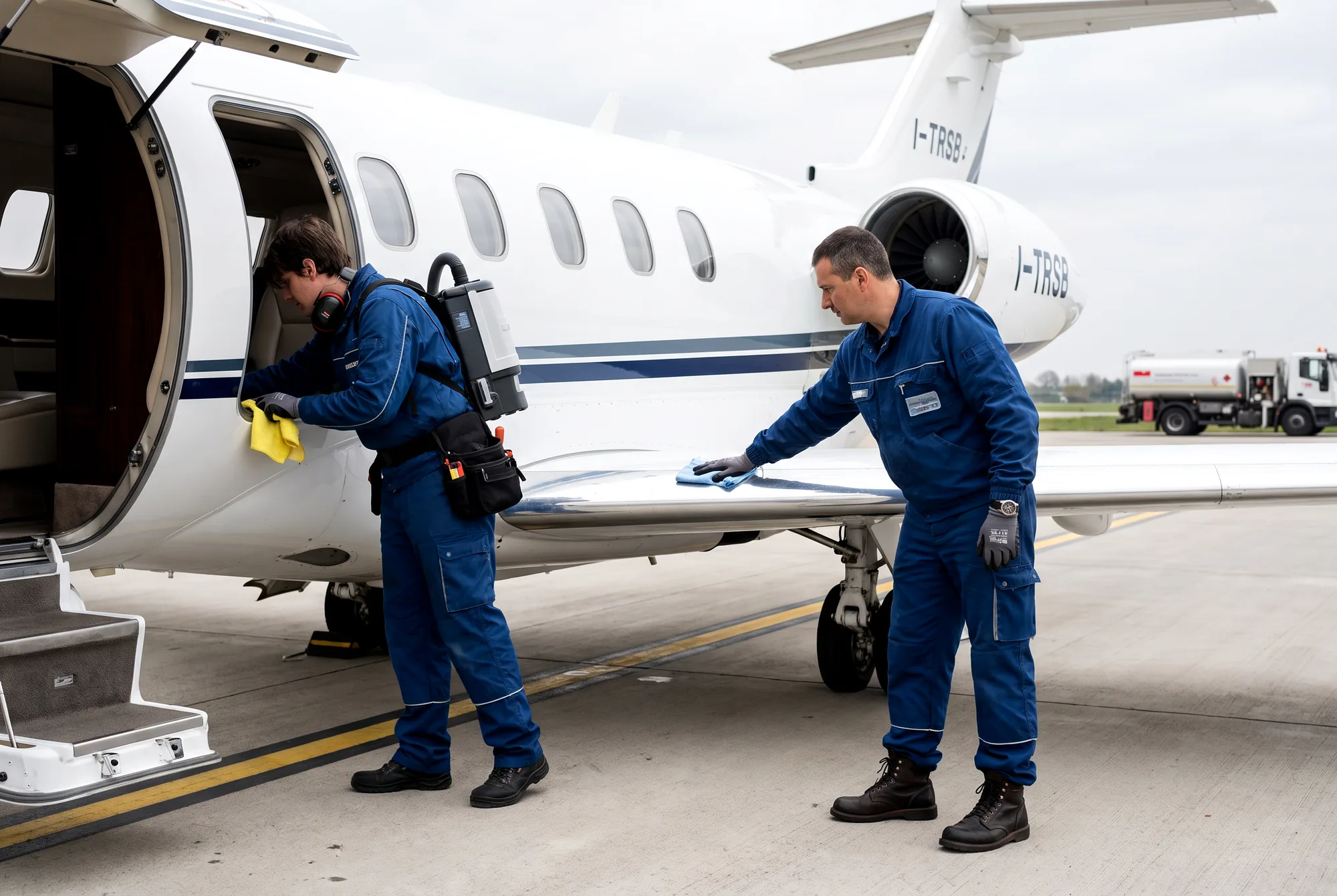
Aircraft Detailing at Venice Marco Polo serves flight departments and charter operators bringing super-midsize through ultra-long-range jets into Venice. We work on the ramp at the General Aviation Terminal, coordinating with handling agents present at the airport to deliver quick turns between legs, full exterior dry washes, complete interior details, brightwork polishing, ceramic coating and fleet-care schedules. Slots are coordinated, PPR is required twenty-four to forty-eight hours ahead, and apron parking is typically limited to seventy-two hours—so timing and documentation matter as much as the work itself.


04R/22L · 3300 m, 04L/22R · 2780 m
AIP and airport data7 ft
H24 (24-hour airport of entry); General Aviation Terminal 06:00-22:00 local, overtime on prior request
13 km
Venice city centre (by road, via Tessera)4 on the airport
independent, no affiliationGeneral Aviation Terminal (SAVE) with adjacent Boat Terminal / private docks for water transfer to Venice
What changes at Venice Marco Polo?
Venice Marco Polo sits seven feet above sea level on the edge of the Venetian Lagoon, thirteen kilometres by road from the city centre via Tessera. Two runways handle traffic: 04R/22L at 3,300 metres and 04L/22R at 2,780 metres. The airport operates H24 as an airport of entry, but the General Aviation Terminal keeps core hours from 06:00 to 22:00 local; overtime is available on prior request. Four handling agents present at the airport serve business aviation: Venice General Aviation—SAVE S.p.A. (Signature Select), Universal Aviation Italy, Sky Services and AviaVIP (Argos VIP Private Handling), all operating from or coordinating through the General Aviation Terminal, which includes a Boat Terminal and private docks for water transfer directly into Venice.
PPR is required for general aviation, and lead time of twenty-four to forty-eight hours is recommended. Although the airport is Level 3 coordinated for airlines, business-aviation sources state that GA movements at LIPZ do not require formal slots. Even so, avoiding the commercial peak between 11:00 and 14:00 local helps prevent fuel and ground delays. Hangarage is available on request via Universal Aviation, but GA parking is scarce and usually capped at seventy-two hours—less during trade shows, the Biennale or peak summer season. That window shapes every detailing schedule: if the aircraft is turning in twelve hours we stage a quick turn and exterior dry wash; if it remains on stand for two nights we can deliver a complete detail with ceramic topcoat, provided the handler confirms the extended slot and escorts are arranged in advance.
How does Terso coordinate Aircraft Detailing at Venice Marco Polo with the handler?
Third-party contractors working airside at LIPZ must hold a current escort or an airport pass issued by SAVE, and every movement onto the apron requires handler coordination. We notify the handling agent forty-eight hours before the scheduled arrival, confirm the stand assignment, verify GPU and water-truck availability if a rinseless wash is authorised, and request access windows that do not overlap with refuelling or catering. The handler expects a list of personnel, vehicle registrations and insurance certificates; we send those as a single PDF the day before, along with the scope of work and an estimated duration.
On the day, our team checks in at the General Aviation Terminal, collects the airside escort if required, and meets the ground crew on the ramp. The captain or chief pilot receives a walk-around brief before we start, and we photograph the aircraft in as-found condition—paint, leading edges, belly panels, gear bays, nacelles and the cabin before the first vacuum pass. At the end of the detail every surface is photographed again under daylight or ramp flood, and the two sets go into a same-day PDF report with time stamps, product batch numbers and any remarks about paint condition or interior wear. That documentation travels with the tech log and gives the flight department a auditable record for insurance, for warranty claims or simply for tracking appearance between bases.
What does the Venetian climate do to paint and cabin materials?
Sea air, high summer humidity and winter fog all leave their mark. Salt haze drifts inland from the Adriatic and the lagoon, settling on upper fuselage surfaces, winglets and tail; if the aircraft sits on the ramp for two or three days without a wash, that haze begins to etch into single-stage paint and dull polished brightwork. Pollen in spring and fine dust during the dry summer months compound the problem, and any rain shower turns the mix into a film that requires decontamination—not just a rinse—to lift cleanly.
Inside the cabin, humidity climbs above seventy per cent from June through September, and leather that is not conditioned regularly will absorb moisture, then crack when the air conditioning runs at altitude. Veneer shows watermarks if galley spills are left overnight, and carpet in the entry vestibule traps grit carried in by passengers boarding from the Boat Terminal. A monthly interior detail—part of a fleet-care program—keeps those materials ahead of wear, whereas a one-off deep clean after six months of neglect often means wet-extraction of carpets, two-stage leather conditioning and careful work around OEM cabin materials that cannot tolerate aggressive chemistry. Climate does not pause; the maintenance schedule should not either.
Which services make sense for a quick Venice turn?
When the aircraft lands at LIPZ in the morning, takes passengers into the city by boat, and departs the same evening for another European leg, the practical window is six to eight hours—minus refuelling, catering and any handler paperwork. In that span a Quick Turn resets the cabin: vacuum, galley wipe-down, lavatory disinfection, window polish and a tidy of seat pockets and stowage. If the exterior is lightly soiled we add an Exterior Dry Wash using waterless products applied panel by panel; the process takes ninety minutes on a super-midsize jet and leaves no standing water on control surfaces or around static ports.
Brightwork Polish can be added if the leading edges and nacelle lips show oxidation, but only if the handler confirms the aircraft will remain on stand long enough for the compound to cure—usually an extra two hours. Cabin Disinfection is a frequent request when the next leg carries a principal or a charter group; we fog the air path and wipe every high-touch surface with aviation-approved quaternary-ammonium solutions, then ventilate the cabin using GPU-supplied air. The combination of quick turn, dry wash and disinfection is the most common same-day package at Venice, and it delivers a flight-ready aircraft without extending the turnaround or requiring a hangar.
What about recurring work and the Fleet Care Program at this base?
For flight departments that keep an aircraft based at LIPZ—or for charter operators running a regular Venice shuttle during the summer season—recurring care prevents the accumulation of salt haze, cabin wear and paint oxidation that turn a small detail into a two-day restoration. The Fleet Care Program is a twelve-month contract: scheduled quick turns after every flight or every second flight, a full interior detail each month, an exterior wash and single-stage polish every quarter, and brightwork restoration twice a year. We store product, tools and vacuum equipment in a secure locker arranged through the handler, so the team arrives on the ramp ready to work rather than hauling gear through the terminal each time.
The program includes priority booking—important when apron slots are tight and PPR windows are short—and a standing airside-access list that speeds handler coordination. Photo documentation accumulates in a digital folder, so the chief pilot can review paint condition month by month and plan ceramic coating or a respray during a scheduled maintenance window. Recurring work also lets us track cabin materials: if a particular leather seat starts to show cracking, we note it in the report and adjust conditioning frequency before the damage requires re-upholstery. One-off details are always available for transient aircraft, but a fleet program turns appearance from a reactive expense into a managed, budgeted line item with measurable results.
How is ceramic coating applied at Venice Marco Polo, and why does it matter here?
Ceramic Coating is a multi-year hydrophobic layer bonded to corrected paint and polished brightwork, and it makes particular sense at a coastal airport where salt and humidity are constants. The process begins with a full exterior wash—rinseless or dry, depending on handler and airport water rules—followed by clay-bar decontamination to lift embedded particles. Any oxidation or swirl marks are corrected with a two-stage polish, and brightwork is brought to a mirror finish by hand. Only then is the ceramic applied, panel by panel, with infrared curing lamps if the ambient temperature is below fifteen degrees Celsius or if the aircraft cannot remain on stand overnight.
Once cured, the coating repels water, fuel stains and exhaust soot; rain sheets off the fuselage rather than beading and leaving spots, and the leading edges stay cleaner between washes. At LIPZ that translates to longer intervals between full details and less labour during each quick turn, because contaminants do not bond to the ceramic the way they bond to bare paint. The coating carries a two-to-five-year warranty depending on the product system, and we provide a maintenance guide that specifies which ramp wash chemicals are safe and which will degrade the layer. For an aircraft that spends a third of the year at Venice—or for any jet operating regularly along the Adriatic coast—ceramic protection pays for itself in reduced detailing frequency and preserved paint condition.
Questions operators ask about detailing at Venice Marco Polo
Do I need a slot for general aviation at Venice Marco Polo?
Business-aviation sources state that GA movements at LIPZ do not require formal slots, even though the airport is Level 3 coordinated for airlines. PPR is required twenty-four to forty-eight hours ahead, and avoiding the commercial peak between 11:00 and 14:00 local helps prevent fuel and ground delays. Apron parking is typically limited to seventy-two hours, less during events, so confirm the stand duration with your handler when you file.
Can Terso work on the ramp, or must the aircraft go into a hangar?
We work on the ramp at the General Aviation Terminal, coordinating access and GPU supply with the handling agent. Hangarage is available on request via Universal Aviation, and we use it when ceramic coating requires controlled temperature or when winter weather makes outdoor work impractical. Most quick turns, dry washes and interior details happen on stand, which keeps costs lower and turnaround times shorter.
How long does a complete detail take at LIPZ?
A Complete Detail on a super-midsize jet takes twelve to sixteen hours, depending on paint condition and cabin size. That includes exterior wash, decontamination, single-stage polish, brightwork by hand, full interior deep clean and disinfection. If the aircraft is staying for two nights we can split the work across two days; if the stand is limited to one overnight we stage the team to finish in a single shift, provided the handler confirms GPU and lighting.
What documentation do you provide after the detail?
Every detail includes a same-day PDF report with before-and-after photographs, time stamps, product batch numbers and remarks on paint or interior condition. The report is emailed to the chief pilot or flight-department manager and can be filed with the tech log. For fleet-care clients, we maintain a digital folder so you can track appearance and material wear over the twelve-month program.
Is water allowed for aircraft washing at Venice Marco Polo?
Rinseless washing is permitted on the apron when arranged through the handler and a water truck is available. We more often use waterless dry-wash products to avoid the coordination overhead and to eliminate standing water near static ports and control-surface gaps. Both methods are aviation-approved and leave the exterior clean without environmental-compliance issues.
Can you detail the aircraft while passengers are boarding?
No; we require the cabin to be empty and the main door to remain open for ventilation and equipment access. Quick turns and interior work are scheduled between legs, after the inbound passengers disembark and before catering or the outbound boarding begins. Exterior dry wash can happen while the cabin is being catered, provided the caterer and our team coordinate around the door and the GPU lead.
Which handling agents at LIPZ does Terso coordinate with?
We coordinate with all handling agents present at the airport: Venice General Aviation—SAVE S.p.A. (Signature Select), Universal Aviation Italy, Sky Services and AviaVIP (Argos VIP Private Handling). Each handler has its own procedures for third-party contractor access, and we submit personnel lists, insurance certificates and vehicle registrations forty-eight hours before the detail. The handler arranges the airside escort if required and confirms stand assignment and GPU availability.
What happens if the aircraft must leave earlier than planned?
We stage the work in priority order—cabin first, then exterior, then brightwork—so that if the departure moves forward the aircraft is still presentable. The chief pilot or handler notifies us as soon as the schedule changes, and we adjust the team size or shift the ceramic coating to the next base. No cancellation fee applies if we receive four hours' notice; within four hours we charge for materials already opened and labour already on site.
Does salt air from the lagoon really damage the paint?
Yes; salt haze settles on upper surfaces and begins to etch single-stage paint within forty-eight to seventy-two hours if not washed. Polished brightwork dulls even faster, and any rain shower turns the salt into a film that requires clay-bar decontamination to remove. Regular washing—or ceramic coating—keeps the paint and metal ahead of that cycle, especially for aircraft based at LIPZ or flying the Adriatic coast frequently.
Can I book a detail on the same day the aircraft arrives?
Same-day booking is possible if we have a team available and the handler can issue airside access on short notice. We recommend forty-eight hours' lead time to confirm personnel, coordinate with the handler and ensure the stand duration is sufficient. During peak summer season or during the Biennale, same-day requests are often impossible because apron slots and handler staff are fully committed.